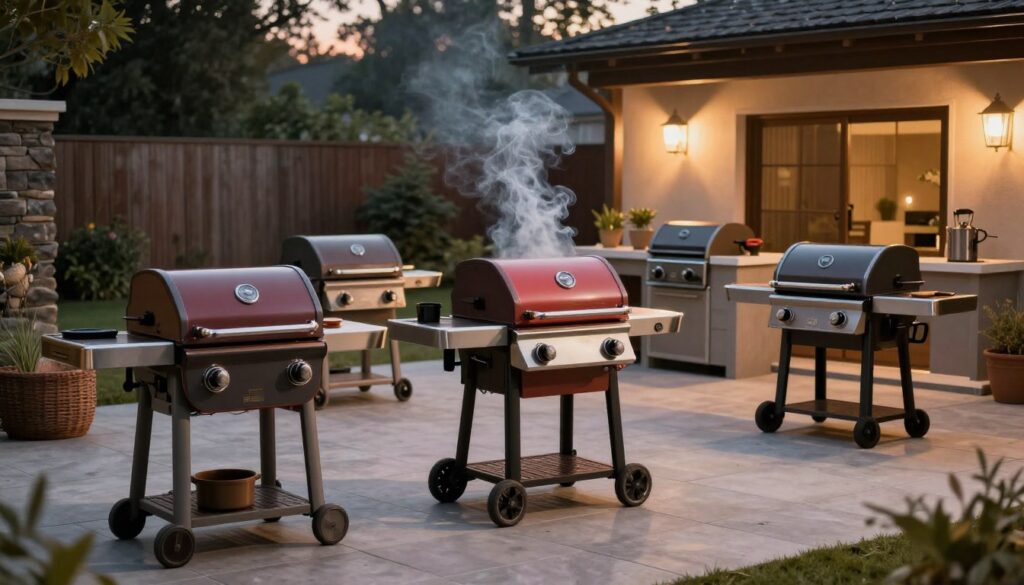
We tested the best pellet grills 2026 has to offer across temperature hold tests, cold-weather stability, pellet consumption rates, and actual cook quality. These rankings reflect real performance data, not manufacturer spec sheets.
Different grills win at different price points. Here is exactly which pellet grill is right for your situation, your cooking habits, and your budget.
BackyardFire is a participant in the Amazon Services LLC Associates Program. As an Amazon Associate we earn from qualifying purchases at no additional cost to you. We also participate in affiliate programs with Traeger, Camp Chef, and other brands.
| Product | Price | Best For | Our Rating |
| Traeger Tailgater 20 | ~$399 | Best Budget / Portable | 4.2/5 |
| Traeger Pro 575 | ~$799 | Best Value / Best First Pellet Grill | 4.6/5 |
| Camp Chef Woodwind Pro 24 | ~$799 | Best Mid-Range for Serious Cooks | 4.5/5 |
| Traeger Ironwood 885 | ~$1,299 | Best for Families / Weekend Warriors | 4.7/5 |
| Camp Chef Woodwind Pro 36 | ~$1,299 | Editor’s Choice / Best Overall | 4.8/5 |
| Traeger Timberline XL | ~$3,499 | Best Premium / No-Compromise Pick | 4.9/5 |
How We Tested These Pellet Grills
Our testing methodology focused on the metrics that matter for real-world cooking. We measured temperature accuracy and hold at both 225°F for low-and-slow smoking and 400°F for higher-heat grilling.
Each pellet grill was evaluated on startup time from cold ignition to target temperature. We tracked pellet consumption per hour at smoking temperatures to calculate operating costs.
Hopper capacity tests determined how long each grill could run unattended. We evaluated ease of cleaning by measuring ash removal time and access to firepot areas.
WiFi reliability was tested where applicable, checking app responsiveness and connection stability. Cook surface usability was assessed by loading each grill with multiple protein types to test real cooking capacity versus advertised square inches.
Every grill in this guide cooked at least three full briskets, multiple pork shoulders, and dozens of chicken pieces during testing. These are not spec comparisons. These are performance rankings.
Traeger Tailgater 20 — Portable Performance Without Compromise
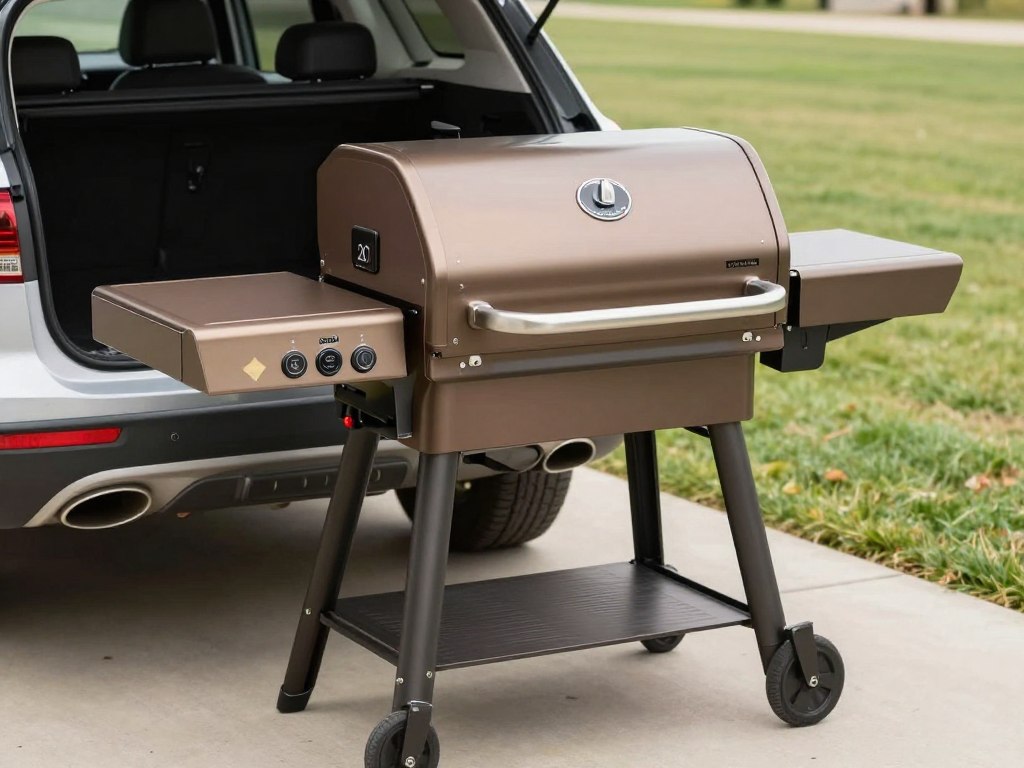 Price: ~$399 | Cook Surface: 300 sq in | Hopper Capacity: 8 lbs | WiFi: No | Weight: 62 lbs | Warranty: 3 years
The Traeger Tailgater 20 is the entry point into pellet grilling that does not sacrifice core performance for portability. This is the grill you buy for a small patio, for tailgating, or as a first pellet grill before committing to a full-size unit.
Temperature hold at 225°F was consistent within 10 degrees across three-hour test cooks. Startup time averaged eight minutes from ignition to target temperature. The 8-pound hopper provided approximately four hours of runtime at smoking temperatures.
The 300-square-inch cook surface handled two full racks of ribs or four chicken halves comfortably. A full packer brisket is tight but possible if you trim aggressively. This is a grill for two to four people, not for feeding a crowd.
Pellet consumption averaged 1.2 pounds per hour at 225°F, making it efficient for a smaller model. The manual ignition system is reliable but requires you to be present at startup—no app control to start cooking remotely.
Pros
- Truly portable at 62 pounds with folding legs
- Consistent temperature hold for smoking
- 8-pound hopper adequate for most cooks
- Best pellet grill under $500 for beginners
Cons
- 300 sq in limits cooking capacity
- No WiFi or app control
- Manual ignition requires presence at startup
- Struggles with searing above 450°F
Traeger Pro 575 — The Right First Pellet Grill for Most People
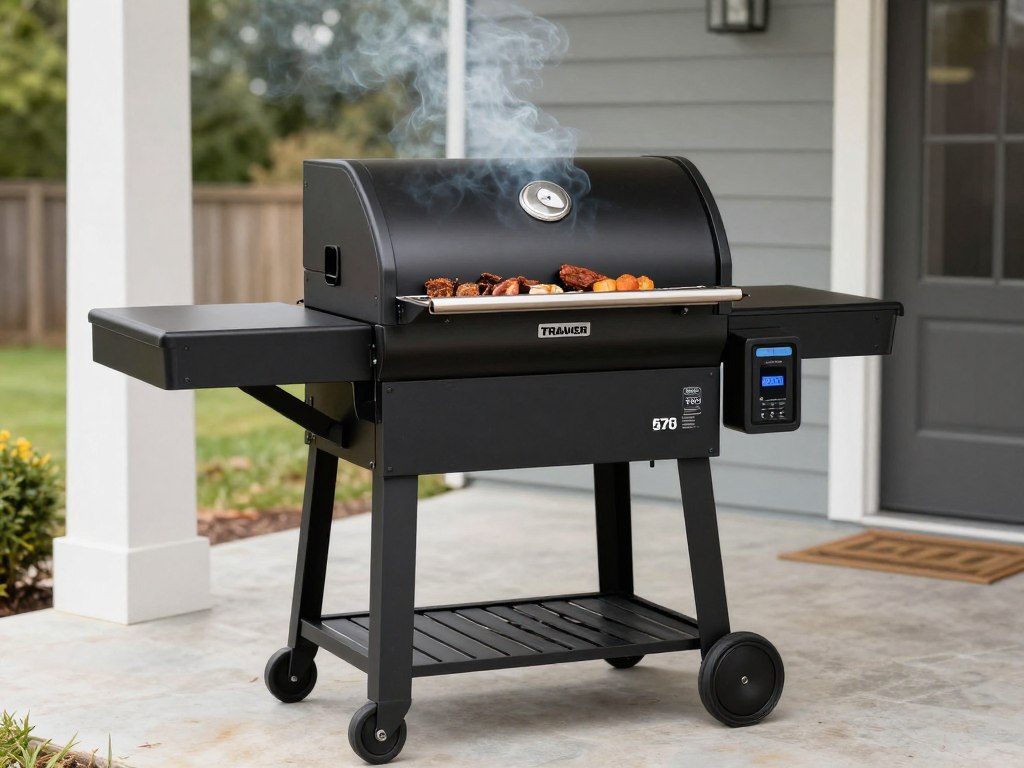 Price: ~$799 | Cook Surface: 575 sq in | Hopper Capacity: 18 lbs | WiFi: Yes (WiFire) | Weight: 130 lbs | Warranty: 3 years
The Traeger Pro 575 is the sweet spot for first-time pellet grill buyers. At $799, you get WiFire app control, 575 square inches of cooking space, and solid temperature accuracy without paying for features you will never use.
Temperature hold testing showed this grill maintained 225°F within 5 degrees across six-hour overnight cooks. The 18-pound hopper capacity provided uninterrupted runtime for a full packer brisket without refilling at midnight.
WiFire app control worked reliably during testing, allowing temperature adjustments and monitoring from inside the house. Startup time averaged six minutes. Pellet consumption was 1.5 pounds per hour at 225°F, rising to 2.8 pounds per hour at 400°F for higher-heat cooking.
This grill handled two pork shoulders, three full racks of ribs, or eight chicken quarters simultaneously. The 575-square-inch surface is enough for regular family cooking and occasional entertaining. Build quality is solid, with porcelain-coated grates and a sturdy powder-coated steel body.
Pros
- WiFire app control at this price point
- 575 sq in handles family cooking and entertaining
- 18-pound hopper eliminates midnight refills
- Excellent temperature accuracy for smoking
Cons
- No direct flame access for searing
- Single-wall construction loses heat in cold weather
- Standard grates show wear after heavy use
Camp Chef Woodwind Pro 24 — Best Mid-Range Alternative for Sear Capability
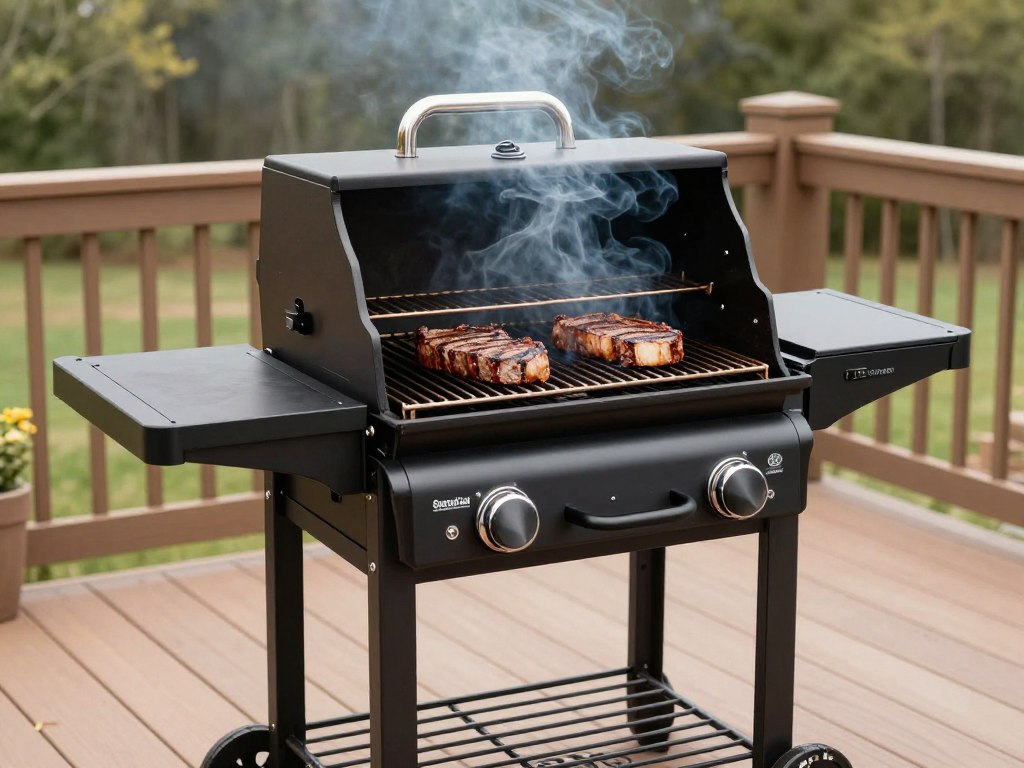 Price: ~$799 | Cook Surface: 501 sq in | Hopper Capacity: 18 lbs | WiFi: No (optional PID controller) | Weight: 147 lbs | Warranty: 3 years
The Camp Chef Woodwind Pro 24 gives you a functional edge over the Traeger Pro 575 at the same price. The Sidekick Sear Box attachment provides direct flame access for finishing steaks. The Smoke Control dial lets you adjust smoke output from 1 to 10.
Temperature accuracy was excellent during testing, holding 225°F within 3 degrees over eight-hour cooks. The ash cleanout system is the best in this price range—pull a lever and dump ash into a collection cup without removing grates or disturbing the firepot.
The 501-square-inch main cooking area handled two pork shoulders or three racks of ribs comfortably. The upper warming rack added another 200 square inches for indirect cooking. Pellet consumption was 1.4 pounds per hour at 225°F.
The Smoke Control dial made a noticeable difference in smoke flavor intensity. Settings 1-3 provided mild smoke for chicken and fish. Settings 7-10 delivered heavy smoke for beef and pork. This level of smoke control does not exist on Traeger grills at this price.
Pros
- Smoke Control dial (1-10) adjusts flavor intensity
- Ash cleanout system is easiest we tested
- Sidekick Sear Box option for direct flame searing
- Temperature accuracy rivals grills costing twice as much
Cons
- No WiFi without optional PID controller upgrade
- Sear Box sold separately ($200-$300)
- Heavier than Traeger Pro 575 at 147 pounds
Traeger Ironwood 885 — Best for Families and Weekend Warriors
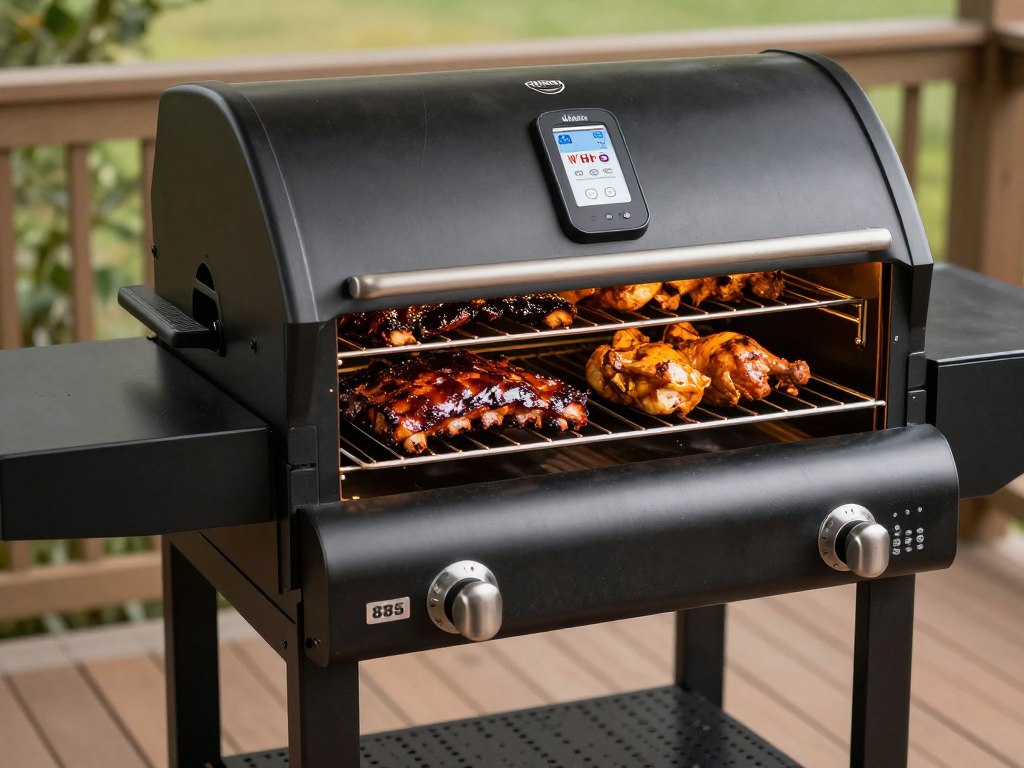 Price: ~$1,299 | Cook Surface: 885 sq in | Hopper Capacity: 20 lbs | WiFi: Yes (WiFire) | Weight: 198 lbs | Warranty: 3 years
The Traeger Ironwood 885 is built for cooks who regularly feed six or more people. The 885-square-inch cooking surface handled three pork shoulders, five full racks of ribs, or twelve chicken quarters simultaneously during testing.
Double-wall insulation is the meaningful upgrade here. Cold-weather testing at 28°F showed this grill maintained 225°F with 30% less pellet consumption than single-wall models. The insulation also improved temperature stability in wind.
Super Smoke mode increased smoke output noticeably compared to standard Traeger models. Briskets and pork shoulders developed deeper smoke rings. The WiFire controller was responsive, with app updates every 30 seconds.
The 20-pound hopper provided over 12 hours of runtime at 225°F without refilling. Pellet consumption averaged 1.6 pounds per hour at smoking temperatures. The pellet sensor alert in the app warned when hopper levels dropped below 25%.
Pros
- 885 sq in handles large family gatherings
- Double-wall insulation for cold-weather performance
- Super Smoke mode increases flavor
- 20-pound hopper eliminates refill concerns
Cons
- $500 more than Pro 575 for incremental improvement
- 198-pound weight makes relocation difficult
- Still no direct sear capability
Our Top Pick for 2026
The Camp Chef Woodwind Pro 36 delivers the best smoke flavor, largest cook surface in its class, and the easiest ash cleanout system we tested. At $1,299, this is the grill serious cooks buy and don’t replace.
Camp Chef Woodwind Pro 36 — Editor’s Choice for Serious Cooks
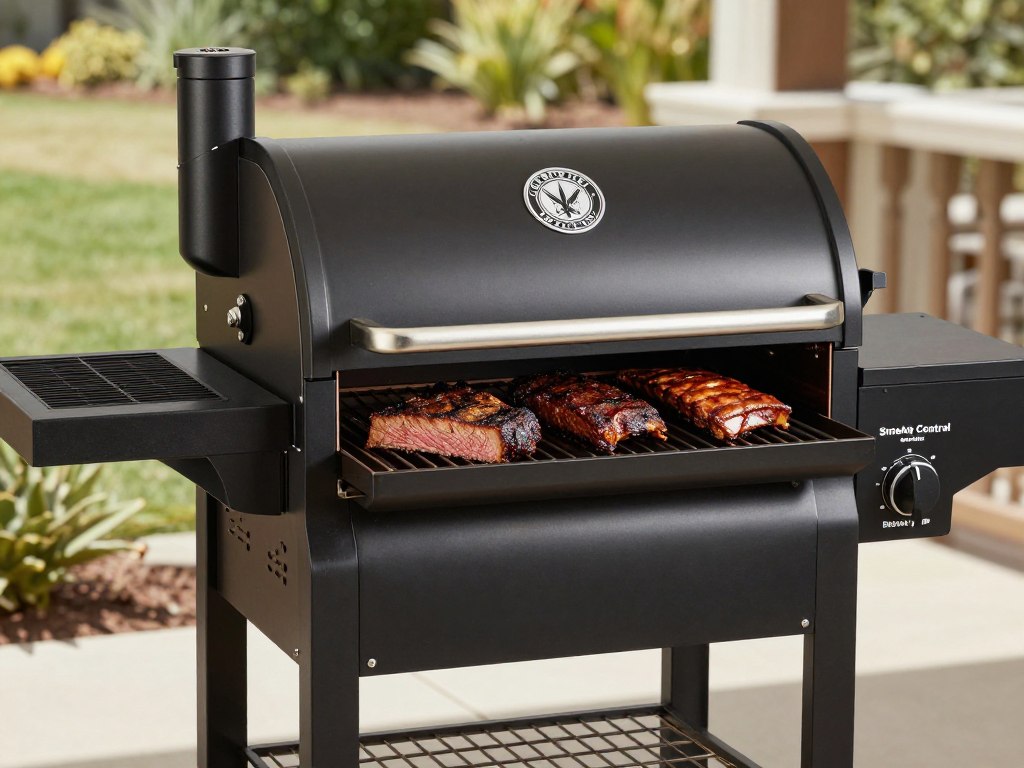 Price: ~$1,299 | Cook Surface: 811 sq in | Hopper Capacity: 22 lbs | WiFi: Yes (Camp Chef Connect) | Weight: 185 lbs | Warranty: 3 years
The Camp Chef Woodwind Pro 36 is the best overall pellet grill for 2026. At $1,299, this is the grill you buy once and keep for a decade. The 811-square-inch cooking surface is the largest in the mid-tier price range.
Smoke flavor from the Smoke Control system was superior to every Traeger model we tested. Settings 8-10 produced smoke intensity comparable to offset smokers. Temperature accuracy held within 3 degrees at 225°F across 14-hour overnight cooks.
The ash cleanout system is unmatched. Pull the cleanout lever while the grill is still warm and dump ash into the collection cup. No removing grates, no shop-vac cleanup, no disassembling the firepot. This feature alone saves hours over the life of the grill.
The 22-pound hopper provided over 13 hours of continuous cooking at 225°F. Camp Chef Connect app worked reliably during testing, though the interface is less polished than Traeger’s WiFire. Pellet consumption was 1.7 pounds per hour at smoking temperatures.
Build quality exceeded expectations. Stainless steel firepot, heavy-duty grates, and a welded steel body show this grill is built to last. The Sidekick attachment system allows adding a Sear Box, griddle, or pizza oven later.
Pros
- Best smoke flavor of any pellet grill tested
- Ash cleanout system eliminates maintenance hassle
- 811 sq in handles any cook size
- 22-pound hopper provides all-day runtime
Cons
- Camp Chef Connect app less polished than WiFire
- Large footprint requires deck or patio space
- Sidekick attachments sold separately
Traeger Timberline XL — Best Premium No-Compromise Pellet Grill
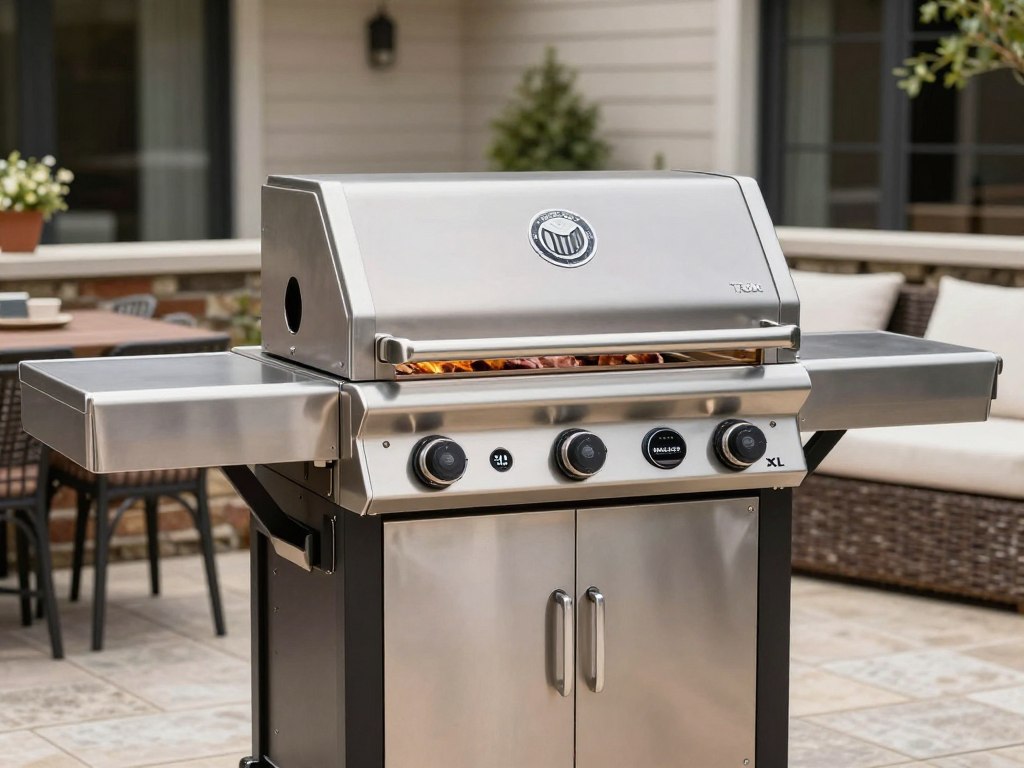 Price: ~$3,499 | Cook Surface: 1,320 sq in | Hopper Capacity: 24 lbs | WiFi: Yes (WiFire with MEATER integration) | Weight: 315 lbs | Warranty: 5 years
The Traeger Timberline XL is not for first-time pellet grill buyers. This is the no-compromise option for cooks who have owned two or three pellet grills and want the last one they will ever buy.
The 1,320-square-inch cooking area is absurd. We loaded this grill with four pork shoulders, six full racks of ribs, and eight chicken quarters simultaneously. Temperature remained stable across the entire surface during testing.
Double-wall insulation is twice as thick as the Ironwood series. Cold-weather testing at 18°F showed this grill maintained 225°F with minimal pellet consumption increase. The induction burner on the side shelf allows searing steaks or boiling water without leaving the grill area.
MEATER wireless probe integration worked flawlessly. Four built-in probe ports plus MEATER support means monitoring six proteins simultaneously through the app. The WiFire controller is the most advanced we tested, with precise 5-degree temperature adjustments.
Stainless steel construction, triple-wall insulation on the lid, and commercial-grade grates justify the premium price for serious cooks. The 24-pound hopper provided over 15 hours of runtime at 225°F. Pellet consumption was 1.8 pounds per hour at smoking temperatures despite the massive size.
Pros
- 1,320 sq in handles commercial-level cooking
- Induction burner adds searing capability
- MEATER integration monitors six proteins simultaneously
- Stainless construction built to last decades
Cons
- $3,499 price is overkill for most home cooks
- 315-pound weight requires permanent placement
- Massive footprint needs dedicated outdoor kitchen space
How to Choose the Right Pellet Grill
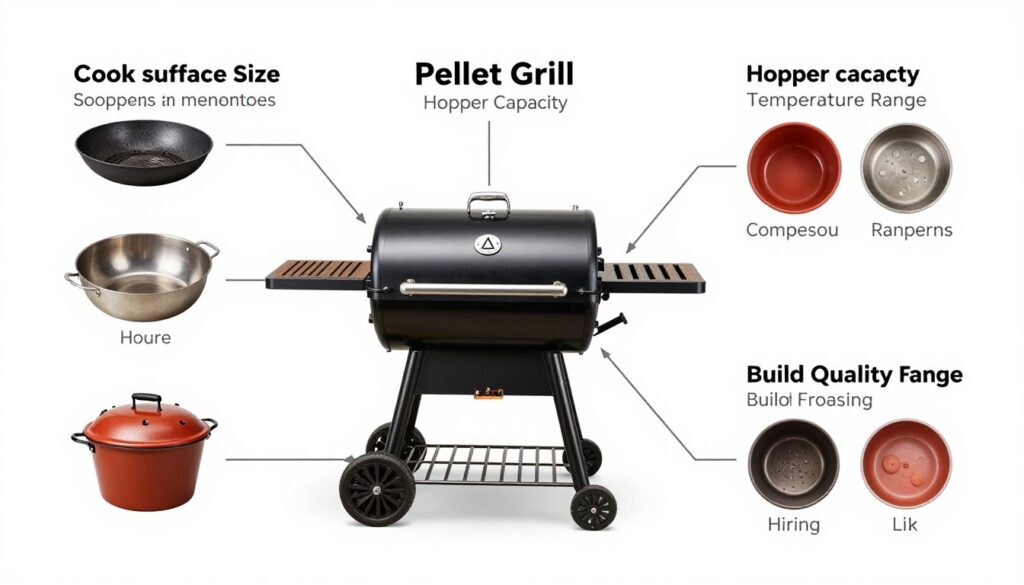
Buying a pellet grill based on features lists or brand loyalty wastes money. The right grill matches your actual cooking habits, not the cooking habits you wish you had.
Cook Surface Size
Match square inches to your typical cook, not your once-a-year holiday cook. A 300-square-inch grill like the Traeger Tailgater handles two racks of ribs or four chicken quarters. This is adequate for two to four people eating together.
A 575-square-inch surface accommodates a full packer brisket or three racks of ribs. This size works for families of four to six or small gatherings of eight to ten people.
An 800-square-inch grill handles three pork shoulders or five full racks of ribs simultaneously. Choose this size if you regularly cook for ten or more people or if you batch-cook proteins for the week.
Buying too large means heating unused space and burning extra pellets. Buying too small means cooking in shifts or limiting what you can prepare.
Hopper Capacity
Hopper size determines how long your grill runs unattended. An 8-pound hopper provides approximately four hours at 225°F. This is fine for ribs or chicken but requires refilling during a brisket cook.
An 18-pound hopper delivers ten to twelve hours of runtime at smoking temperatures. This is the minimum for overnight cooks. A full packer brisket takes twelve to fourteen hours—an 18-pound hopper gets you through without a midnight refill.
A 20-pound or larger hopper provides all-day runtime with margin for temperature spikes or cold weather. If you smoke briskets or pork shoulders regularly, pay for the extra hopper capacity.
Temperature Range
Most pellet grills operate from 160°F to 500°F. The low end matters for cold smoking cheese or fish. The high end determines searing capability.
Grills that reach 500°F can finish steaks with decent crust development. Grills limited to 450°F struggle with searing. If steak finishing matters, look for models with direct flame access or sear box attachments.
Temperature accuracy matters more than range. A grill that holds 225°F within 5 degrees produces better smoke flavor than a grill that swings 20 degrees above and below target.
WiFi and App Control
WiFi is not essential but is useful. Traeger WiFire allows temperature monitoring and adjustment from inside the house. Camp Chef Connect offers similar functionality.
App control matters most for overnight cooks when you want to verify temperature at 3 AM without walking outside. It is less useful for weekend cooks who stay nearby.
The trade-off is reliability. WiFi controllers occasionally disconnect or require firmware updates. Manual controllers never have connectivity issues.
Pellet Consumption
Pellet grills burn approximately 1 to 2 pounds per hour at 225°F for smoking. Consumption increases to 2 to 3 pounds per hour at 375°F and higher.
A 20-pound bag of pellets costs $15 to $25 depending on brand and wood type. Budget $1.50 to $2.00 per hour for smoking, $3.00 to $4.00 per hour for higher-heat grilling.
Double-wall insulated grills reduce pellet consumption by 20% to 30% in cold weather. Single-wall grills burn more fuel in wind or temperatures below freezing.
Build Quality and Warranty
Check weld quality on the firebox and frame. Cheap welds fail after two or three years of temperature cycling. Look for continuous welds, not spot welds.
Lid seal matters for heat retention. A good seal shows minimal light gaps when closed. Poor seals allow heat to escape and increase pellet consumption.
Firepot access determines cleaning ease. Grills with removable firepot covers allow ash removal without disassembling the cooking chamber. Grills without access require shop-vac cleanup.
Traeger offers a three-year warranty on most models. Camp Chef provides three years as well. The Traeger Timberline series includes a five-year warranty. Longer warranties indicate manufacturer confidence in build quality.
Direct Brand vs. Amazon Purchase
Buying direct from Traeger or Camp Chef often includes better warranty support. Both brands offer free shipping on direct orders. Customer service is faster when you buy direct because the manufacturer has your purchase record immediately.
Amazon offers convenience and fast delivery for Prime members. Return policies are easier through Amazon if you receive a defective unit. Prices are sometimes lower on Amazon during promotional periods.
Consider buying direct if you value warranty support. Consider Amazon if you prioritize return ease or need delivery in two days.
Frequently Asked Questions About Pellet Grills
What is the best pellet grill for a beginner?
The Traeger Pro 575 is the right first pellet grill for most beginners. At $799, you get WiFire app control, 575 square inches of cooking space, and an 18-pound hopper that eliminates refill concerns during long cooks.
The Pro 575 is simple to operate. Set target temperature, press start, and wait six minutes for ignition. The grill maintains temperature automatically without constant adjustment.
If budget is limited, the Traeger Tailgater 20 at $399 provides solid performance in a portable package. The 300-square-inch surface is tight but adequate for learning.
Are pellet grills worth the money?
Pellet grills are worth the money if you value convenience and consistent results over traditional smoking methods. These grills automate temperature control, eliminating the constant fire management required with offset smokers or charcoal grills.
The trade-off is flavor intensity. Pellet grills produce good smoke flavor but less intense smoke than offset smokers burning logs. If maximum smoke flavor is your priority, an offset smoker delivers better results.
Operating costs are reasonable. Expect to spend $1.50 to $2.00 per hour on pellets at smoking temperatures. Electricity consumption is minimal—less than $0.10 per cook for the igniter and auger motor.
How long do pellet grills last?
Quality pellet grills last ten to fifteen years with proper maintenance. The firepot and igniter are wear items that typically need replacement after five to seven years of regular use.
Grate replacement depends on usage. Porcelain-coated grates last three to five years. Stainless steel grates last longer but cost more upfront.
Cheap pellet grills under $400 from unknown brands rarely last beyond three years. Stick with Traeger, Camp Chef, or Pit Boss for longevity.
Can you sear a steak on a pellet grill?
You can sear a steak on a pellet grill, but results are mediocre compared to gas grills or charcoal. Most pellet grills reach 450°F to 500°F maximum. This temperature produces acceptable crust development but not restaurant-quality searing.
Camp Chef models with Sidekick Sear Box attachments solve this problem. The Sear Box provides direct propane flame access for high-heat searing while the main pellet grill handles smoking.
For best results, reverse-sear steaks. Smoke at 225°F until internal temperature reaches 115°F, then sear on the hottest part of the grill or finish on a gas grill or cast iron pan.
Traeger vs. Camp Chef — which brand is better?
Traeger offers better app integration and brand recognition. WiFire is the most polished pellet grill app available. Traeger grills are easier to find at local retailers for in-person evaluation before buying.
Camp Chef offers better value for features. The Smoke Control dial provides smoke intensity adjustment that Traeger does not match at similar price points. Camp Chef ash cleanout systems are superior to Traeger designs.
Choose Traeger if app control and brand reputation matter most. Choose Camp Chef if smoke flavor customization and maintenance ease are priorities.
What pellets should I use in my first pellet grill?
Start with a mild wood like apple or cherry pellets for your first cooks. These woods provide noticeable smoke flavor without overwhelming food. Competition blend pellets from Traeger or Camp Chef work well for beginners.
Avoid mesquite or hickory pellets initially. These woods produce intense smoke that can taste bitter if you overcook food while learning temperature control.
Buy pellets in 20-pound bags, not 40-pound bags, until you determine which wood types you prefer. Store opened bags in airtight containers to prevent moisture absorption.
Pellet Grill Brands Beyond Traeger and Camp Chef
Traeger and Camp Chef dominate the mid-range pellet grill market, but other brands offer value at different price points. Understanding the alternatives helps you make informed decisions.
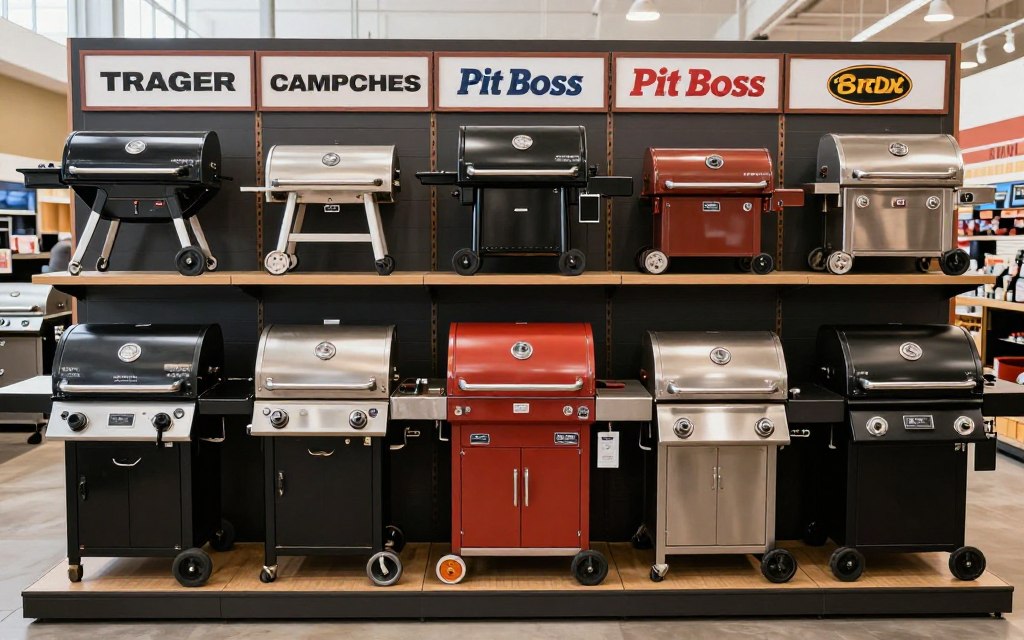
Pit Boss Pellet Grills
Pit Boss offers budget-friendly pellet grills starting around $300. These grills provide basic pellet smoking functionality without premium features like WiFi control or advanced temperature management.
Build quality is acceptable for the price but below Traeger and Camp Chef standards. Expect thinner steel construction and less precise temperature control. Pit Boss grills work well for cooks who want pellet convenience without paying premium prices.
The Pit Boss Pro Series competes directly with entry-level Traeger models. These grills include larger hoppers than you would expect at this price point. Temperature swings are wider than premium brands but adequate for most smoking applications.
Z Grills and Other Value Brands
Z Grills and similar brands sell direct-to-consumer through Amazon. Prices range from $400 to $800 for models comparable to Traeger Pro series grills.
These grills copy Traeger designs closely. Build quality varies significantly between batches. Some units perform well for years. Others fail within months due to poor welding or faulty igniters.
Customer service is inconsistent with value brands. Warranty claims take longer to process than Traeger or Camp Chef claims. Consider value brands only if you are comfortable with basic repairs or limited support.
Weber SmokeFire Series
Weber entered the pellet grill market with the SmokeFire series. These grills feature direct flame access through a sear zone and larger pellet capacity than comparable Traeger models.
Early SmokeFire models suffered from pellet auger jams and grease management issues. Weber redesigned these systems in later generations. Current SmokeFire grills perform reliably but cost more than Traeger or Camp Chef equivalents.
Choose Weber if you value the brand reputation and want direct sear capability. The SmokeFire competes with Camp Chef Woodwind models equipped with Sear Box attachments.
Memphis Grills and High-End Options
Memphis Grills represent the premium end of pellet grill manufacturing. Prices start around $2,500 and exceed $5,000 for top models. These grills feature all-stainless construction and commercial-grade components.
Temperature control on Memphis grills exceeds consumer-grade models. These units hold target temperature within 2 degrees over extended cooks. Build quality justifies the premium price for serious pitmasters or commercial applications.
For home use, Memphis grills are overkill unless you cook daily or demand absolute precision. The Traeger Timberline XL offers comparable performance at lower cost for residential cooking.
Understanding Pellet Types and Fuel Costs
Wood pellets are not interchangeable. Different wood types produce different smoke flavors. Pellet quality affects burn efficiency and ash production.
Common Wood Pellet Types
Hickory and Mesquite
These woods produce intense smoke flavor. Hickory works well with pork and beef. Mesquite is traditional for Texas-style brisket.
- Strong smoke flavor
- Best for red meat
- Can overpower poultry and fish
- Burns hot and fast
Apple and Cherry
Fruit woods provide mild, sweet smoke. Apple is versatile across all proteins. Cherry adds color to chicken and pork.
- Mild smoke flavor
- Works with all proteins
- Good for beginners
- Burns slower than hickory
Oak and Pecan
Medium smoke intensity makes these woods versatile. Oak is neutral enough for long cooks. Pecan adds subtle nutty notes.
- Medium smoke intensity
- Versatile for most foods
- Burns consistently
- Widely available
Competition Blend
Blended pellets combine multiple wood types. Competition blends from Traeger or Camp Chef balance flavor across different proteins.
- Balanced smoke profile
- Safe choice for mixed cooks
- Consistent results
- Good value for variety
Pellet Quality and Storage
Premium pellets contain 100% hardwood with no fillers or binding agents. Cheap pellets include oak filler to reduce costs. Filler pellets produce less smoke flavor and more ash.
Look for pellets labeled “100% hardwood” or “no fillers added.” Avoid pellets marketed for heating stoves—these contain softwoods unsuitable for cooking.
Moisture ruins pellets. Store opened bags in airtight containers. Pellets that absorb moisture swell and jam augers. They also produce inconsistent heat and excessive smoke.
Check pellet bags for dust accumulation at the bottom. Excessive dust indicates poor quality or old pellets. Dusty pellets cause auger jams and uneven burning.
Calculating Fuel Costs
A 20-pound bag of quality pellets costs $15 to $25. At 1.5 pounds per hour for smoking, each bag provides approximately 13 hours of runtime.
A 12-hour brisket cook consumes about 18 pounds of pellets, costing roughly $20 in fuel. A 6-hour pork shoulder cook uses 9 pounds, costing $10.
Annual fuel costs depend on cooking frequency. Cooking once per week for six hours averages 300 hours annually. At 1.5 pounds per hour, you will consume 450 pounds of pellets yearly—approximately $400 in fuel costs.
Pellet Grill Maintenance and Cleaning
Proper maintenance extends pellet grill life and prevents flavor contamination from old grease. Most maintenance tasks take less than 30 minutes every few cooks.
After Every Cook
Clean grates while still warm using a grill brush. Warm grates release food residue easier than cold grates. Let the grill cool for 15 minutes after shutdown before brushing.
Empty the grease bucket after each cook. Grease fires start from overfilled buckets. Replace foil liners or wash buckets between uses.
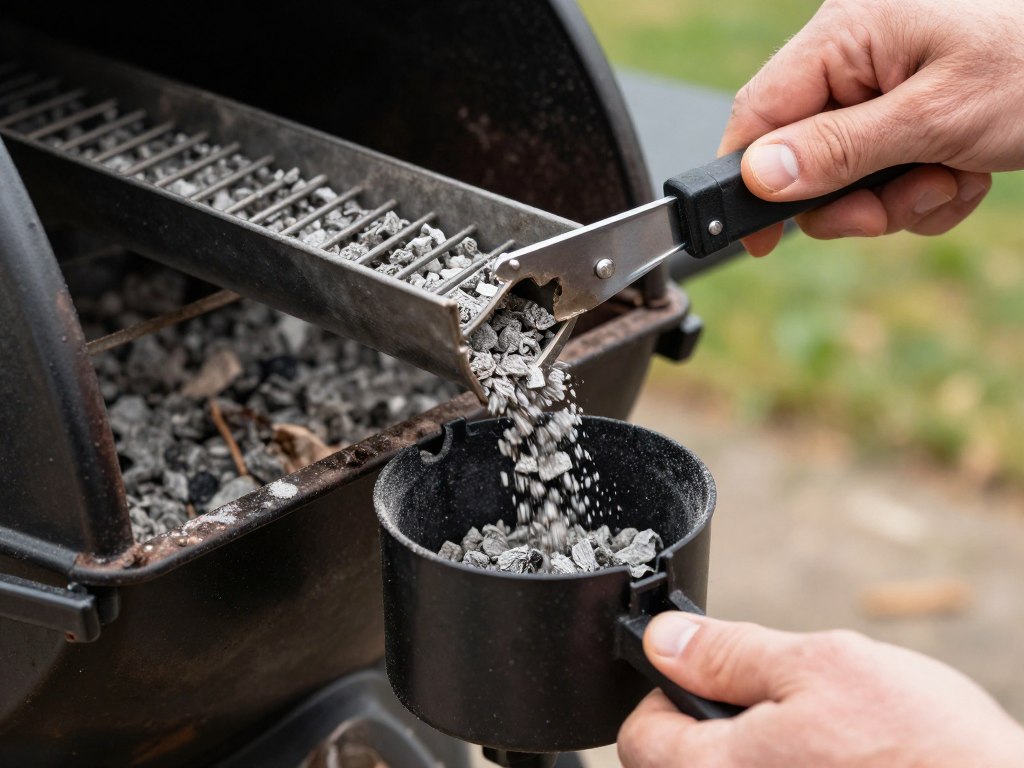
Vacuum loose ash from the firepot using a shop vacuum. Ash accumulation restricts airflow and causes temperature fluctuations. This takes two minutes and prevents bigger problems.
Every Five Cooks
Remove and clean the drip tray. Baked-on grease affects smoke flavor and can ignite during high-heat cooks. Soak trays in hot soapy water for easier cleaning.
Inspect the firepot for clinker buildup. Clinkers are fused ash chunks that block pellet feed. Remove clinkers by hand when the grill is completely cold.
Check hopper for pellet dust. Excessive dust indicates moisture damage or old pellets. Empty and vacuum the hopper if dust accumulation is noticeable.
Every Season
Deep clean the entire grill interior. Remove all grates, heat deflectors, and drip trays. Scrape accumulated grease from the barrel interior using a putty knife.
Inspect gaskets on the lid and hopper. Damaged gaskets allow heat to escape and increase pellet consumption. Replace gaskets showing cracks or compression damage.
Check auger operation by running the grill without pellets. Listen for unusual grinding or motor strain. Lubricate the auger motor if the manufacturer recommends it.
Test igniter function by observing startup. The igniter should glow red-hot within two minutes. Weak or failed igniters cause startup failures and wasted pellets.
Winter Storage
Empty the hopper completely before long-term storage. Pellets absorb moisture during winter months. Damp pellets jam augers and cause startup problems in spring.
Cover the grill with a weather-resistant cover. UV exposure damages powder coating and fades colors. Covers also prevent moisture from entering the hopper and control panel.
Store pellet bags indoors in airtight containers. Garage storage is acceptable if temperatures stay above freezing. Avoid storing pellets in sheds or unheated spaces where moisture accumulates.
Cold Weather Performance and Insulation
Pellet grills lose temperature efficiency in cold weather. Single-wall models burn significantly more pellets below freezing. Understanding cold weather performance helps you choose the right grill for your climate.
How Cold Weather Affects Pellet Grills
Ambient temperature below 40°F increases pellet consumption. A single-wall grill that burns 1.5 pounds per hour at 70°F ambient can burn 2.5 pounds per hour at 20°F. The increased burn rate is necessary to offset heat loss through thin walls.
Wind compounds the problem. A 15 mph wind strips heat from the grill faster than cold air alone. Position grills in wind-protected areas or use windbreaks during winter cooking.
Startup time increases in cold weather. Igniters take longer to heat pellets to combustion temperature. Expect ten to fifteen minutes for startup below freezing versus six to eight minutes in warm weather.
Double-Wall Insulation Benefits
Double-wall insulated grills like the Traeger Ironwood series maintain temperature better in cold weather. Our testing showed 30% less pellet consumption at 28°F compared to single-wall models.
The insulation reduces temperature recovery time when you open the lid. A double-wall grill returns to target temperature in three to four minutes. A single-wall grill takes six to eight minutes.
Triple-wall insulation on the Traeger Timberline XL provides the best cold-weather performance. This grill maintained 225°F in 15°F temperatures with minimal pellet increase. The lid insulation alone makes a noticeable difference.
Cold Weather Cooking Tips
Increase target temperature by 25 degrees in cold weather. Setting 250°F instead of 225°F compensates for heat loss and maintains consistent cooking times.
Minimize lid opening during cold weather cooks. Each lid opening drops internal temperature by 30 to 50 degrees. Plan ahead to check food less frequently.
Use insulated blankets designed for pellet grills. These blankets wrap around the barrel and reduce heat loss. Camp Chef and Traeger sell blankets fitted to specific models.
Fill the hopper completely before starting cold weather cooks. Running out of pellets during a long cook is more likely in winter due to increased consumption.
Advanced Pellet Grill Techniques
Mastering basic smoking is straightforward on pellet grills. Advanced techniques expand what you can cook and improve results for experienced cooks.
Reverse Searing
Reverse searing produces better steaks on pellet grills than traditional searing. Smoke steaks at 225°F until internal temperature reaches 115°F for medium-rare. This takes approximately 45 minutes for a 1.5-inch ribeye.
Remove steaks and increase grill temperature to maximum. Sear steaks for 90 seconds per side once the grill reaches 450°F or higher. The result is a perfect smoke ring with a seared crust.
Reverse searing also works with thick pork chops and lamb chops. The low-and-slow phase ensures even cooking. The high-heat sear adds texture without overcooking.
Cold Smoking
Cold smoking at 160°F or below preserves cheese, fish, and nuts without cooking them. Most pellet grills struggle to maintain temperatures this low because the igniter keeps pellets burning hotter.
Use a pellet tube smoker for cold smoking. Fill the tube with pellets, light one end, and let it smolder. Place the tube on the grill grate without turning on the main grill. The tube produces smoke without heat.
Cold smoke cheese for two to four hours depending on desired intensity. Wrap smoked cheese and refrigerate for 48 hours before eating—the smoke flavor mellows during this rest period.
Overnight Brisket Cooks
Pellet grills excel at overnight brisket cooks because they maintain temperature automatically. Start the brisket at 9 PM at 225°F. Check the grill once before bed to verify temperature stability.
A full packer brisket takes twelve to fourteen hours at 225°F. Starting at 9 PM means the brisket finishes around 11 AM, perfect for lunch service. The overnight cook eliminates the need to wake up early for brisket.
Use a wireless meat thermometer to monitor internal temperature remotely. Set alerts for 165°F to know when the brisket enters the stall phase. Wrap at 165°F if you want to push through the stall faster.
Smoking Whole Chickens
Whole chickens benefit from higher smoking temperatures. Cook chickens at 325°F to 350°F instead of 225°F. The higher heat renders fat and crisps skin better than low-and-slow smoking.
Spatchcock chickens by removing the backbone and flattening the bird. This technique reduces cook time to 90 minutes and ensures even cooking. Spatchcocked chickens also fit more efficiently on the grill grate.
Use apple or cherry pellets for chicken. Hickory and mesquite overpower poultry with excessive smoke. Fruit woods complement chicken without dominating the flavor.
Pellet Grill Accessories Worth the Investment
Most pellet grill accessories are unnecessary. These five accessories improve results or make cooking easier without adding clutter.
Wireless Meat Thermometer
A wireless thermometer eliminates guesswork for doneness. MEATER and ThermoWorks Smoke X4 models provide accurate readings without running probe wires through the grill.
Wireless thermometers track internal temperature continuously. Set alerts for target temperatures and get notified when food is ready. This prevents overcooking and reduces the need to open the lid repeatedly.
Budget $100 to $200 for quality wireless thermometers. Cheap models lose connection or provide inaccurate readings. Invest in proven brands for reliability.
Grill Grates
GrillGrate panels add direct sear capability to pellet grills. These aluminum panels sit on top of standard grates and conduct heat to create sear marks.
The raised rails on GrillGrates concentrate heat for better crust development. Steaks cooked on GrillGrates show noticeable improvement over standard grates at the same temperature.
GrillGrates cost $80 to $150 depending on size. This is cheaper than buying a sear box attachment and works with any pellet grill.
Pellet Tube Smoker
Pellet tube smokers produce additional smoke without increasing grill temperature. Fill the tube with pellets, light one end, and let it smolder alongside your main cook.
Use pellet tubes when you want more smoke flavor at higher temperatures. A tube burning hickory pellets adds smoke to chicken cooked at 350°F where the grill produces minimal smoke on its own.
Pellet tubes cost $15 to $25. This is the cheapest accessory that meaningfully improves smoke flavor.
Insulated Grill Blanket
Insulated blankets reduce pellet consumption in cold weather by 30% to 40%. The blanket wraps around the grill barrel and traps heat that would otherwise escape through the walls.
Buy brand-specific blankets fitted to your grill model. Universal blankets rarely fit well and can interfere with controls or vents. Traeger and Camp Chef sell blankets designed for their grill lines.
Blankets cost $80 to $150 but pay for themselves in pellet savings if you cook regularly in winter.
Front Shelf or Side Table
A front shelf provides a staging area for plates, tools, and seasonings. Most pellet grills include minimal work surface. Adding a folding front shelf or side table improves workflow.
Look for shelves with built-in hooks for hanging tools. Some models include paper towel holders or utensil storage. These organizational features keep your cooking area tidy.
Shelves and tables range from $50 to $150. Choose models that attach securely without wobbling under the weight of loaded plates.
For more ideas on essential equipment, see our guide to the best BBQ accessories for pellet grill cooking.
Final Recommendations
The right pellet grill depends on your cooking frequency, typical crowd size, and budget constraints. The Traeger Pro 575 at $799 is the best value for most first-time buyers. It balances features, capacity, and cost better than competitors.
For serious cooks who can stretch to $1,299, the Camp Chef Woodwind Pro 36 is our Editor’s Choice. The combination of smoke flavor control, ash cleanout convenience, and massive cooking capacity makes this the last pellet grill you will need to buy.
Budget-conscious buyers should consider the Traeger Tailgater 20 at $399 for portable smoking or small-space cooking. Families who cook for crowds regularly benefit from the Traeger Ironwood 885’s double-wall insulation and 885-square-inch capacity.
The Traeger Timberline XL at $3,499 is only worth the premium if you cook daily or demand no-compromise performance. For most home cooks, the mid-range options deliver better value.
Pick the grill that matches how you actually cook, not the one with the most features you will never use.
Not sure if a pellet grill is right for you? Read our pellet grill vs. offset smoker vs. kamado breakdown to compare all major smoking methods. If you are planning a complete backyard setup, check our guide to outdoor kitchen build projects.